Pro Tip for Houston
Many Houston businesses overwrite video in 3–7 days. Aim to send preservation letters within 24–72 hours, including requests for bus, garage, and storefront cameras before automatic deletion.

Se Habla Español
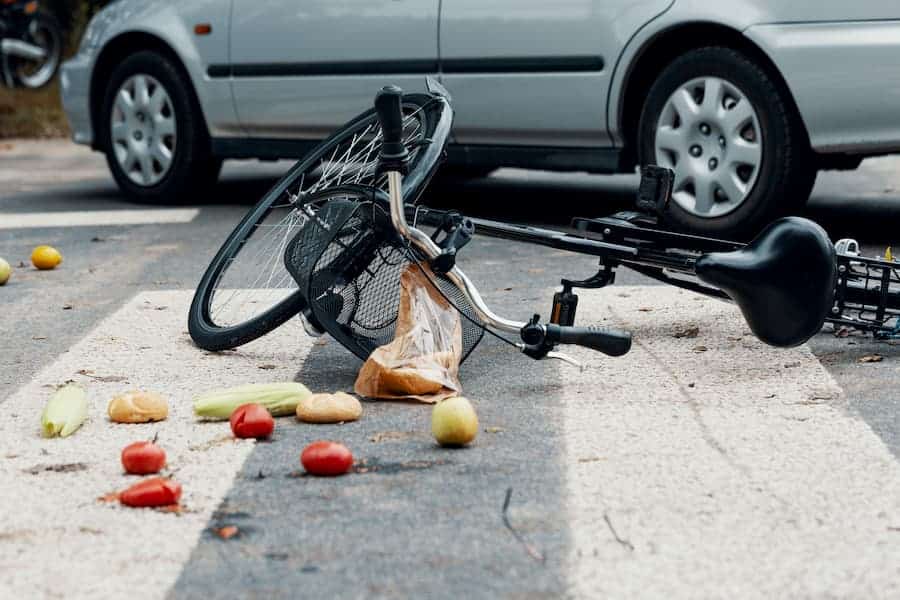
Yes—you can sue in Texas when a driver, company, or other at‑fault party hits you on your bike and their negligence (carelessness or breaking safety rules) causes your injuries. If you’re hurting and confused after a crash in Montrose, Midtown, or the Heights, you’re not alone. To win, we prove four things in plain English: duty (they owed you safe driving), breach (they didn’t), causation (their choices caused the crash), and damages (medical bills, missed work, pain, and more). We’ll walk you through it.
Texas law lets you bring a claim against the driver, property owner, or contractor whose choices put you on the pavement—if their negligence caused the harm. Think close-pass on Westheimer, a right hook at a Midtown bus stop, or a downtown dooring. We tie those facts to the same four elements above using evidence, not guesses. That means video, witnesses, and the HPD (Houston Police Department) report—plus corrections when it blames the cyclist.
In this Houston-first guide, we break down your rights as a Texas cyclist, the 51% bar rule (you can recover unless you’re more than 50% at fault), what compensation is on the table, and the exact steps to protect your claim today. We move fast on camera footage, medical proof, and insurance. Free call/text review, 24/7. Hablamos español.
You saw “Free Case Review—Houston Bike Lawyer 24/7.” So why does speed matter here in Houston? Because our streets are a patchwork: protected lanes downtown and the Lamar cycletrack, Bayou Greenways that feel calm, then mixed-traffic corridors like Westheimer and high-speed arterials where drivers push 45+. HPD (Houston Police Department) crash reports and TxDOT (Texas Department of Transportation) data show bike crashes cluster along these transitions. Texas Transportation Code §551.101 recognizes bicycles as vehicles sharing the road, which we use to anchor fault and rights from day one.
On Monday you’re rolling the Buffalo Bayou trail; on Tuesday you’re threading construction detours in Midtown or a door zone downtown. Different environments, different proof. HPD’s CR‑3 (the official state crash report) becomes the insurer’s playbook, so details like lane position, sightlines, and signal timing matter. We match those details with local realities: Lamar storefront cams, Westheimer bus stops, and corridor patterns TxDOT tracks. When the report is thin or biased, we fix it with video, witnesses, and the code sections that confirm your right to be there.
Even with clear rights, the first weeks can snowball: ER bills arrive, you miss shifts, and the insurer hints you were “hard to see.” Fast, informed action preserves video, corrects reports, and protects your paycheck while you heal.
We see strong Texas cases fall apart because evidence disappears and insurers steer the story. Small early mistakes—like a casual statement or a missed camera request—turn clean liability into a debate. That’s not fair. It’s also fixable if you move quickly.
Here are the roadblocks Houston riders hit after a crash—and how we plan around them:
Texas gives most injury victims two years to file under CPRC (Texas Civil Practice and Remedies Code) §16.003, but the practical clock runs much faster. Claims involving government entities trigger the Texas Tort Claims Act, which can require notice as early as 90 days depending on the entity. Meanwhile, surveillance overwrites quickly: many small businesses recycle footage in 24–72 hours, larger systems in 7–30 days. Body cam and dashcam video also have short retention windows. The takeaway: legal deadlines are measured in years, but evidence disappears in days.
That’s why we send preservation letters in the first 24–72 hours and follow with subpoenas when needed. METRO (Metropolitan Transit Authority of Harris County) bus footage, nearby storefront CCTV (closed‑circuit video), and garage cams often decide right‑hook and dooring cases—but only if we request them before overwrite. We also chase 911 audio and CAD (computer‑aided dispatch) logs early, because dispatcher notes can capture fresh admissions. Delay turns clean proof into a credibility fight. Move fast, and the pictures, timestamps, and data tell your story for you.
Insurance clocks tick too. UM/UIM (uninsured/underinsured motorist) policies require prompt notice and cooperation, or carriers argue prejudice. Hospitals can file liens within days, and health plans press subrogation (reimbursement) demands later. We manage notices, lien audits, and documentation from day one so you don’t miss coverage or leave money on the table.
Those insurance clocks are real—so what rules decide who pays? Negligence is the backbone: we prove four things in plain English—duty, breach, causation, and damages. Texas uses comparative responsibility under Chapter 33 (the 51% bar), which reduces money by your share of fault. Example: $50,000 in damages with 10% fault pays $45,000. Our job is to build evidence that keeps your percentage low and your recovery high, starting in week one with video, records, and witnesses.
1. Duty: Drivers must operate safely around cyclists—recognize bike lanes, give safe passing space, and yield at Austin St./Bagby intersections just as they would to cars.
2. Breach: Texting, buzzing a rider near the Lamar cycletrack, or rolling right-on-red across the bike lane violates those duties and creates predictable danger.
3. Causation: The breach must cause the crash—door opens into the Main St. bike path, strikes your bars, you’re thrown, injuries follow.
4. Damages: We prove medical bills, future care, lost wages, bike and gear replacement, and pain and suffering with records, receipts, photos, and consistent medical notes.
Under the 51% bar, you recover unless you’re more than 50% at fault. Your award is reduced by your percentage. Example: $100,000 in damages with 20% fault pays $80,000. This is why we fight blame-shifting with hard proof—video, EDR (event data recorder), phone records, and experts. Tight evidence shrinks your percentage. Next, let’s map common Houston crash scenarios to fault theories and the exact evidence that wins them.
Because tight evidence shrinks your percentage, here’s a quick Houston-specific table mapping frequent crash patterns to the proof we grab fast, the defenses we expect, and the counters that win.
| Scenario | Key Evidence to Collect | Common Defense | How to Counter |
|---|---|---|---|
| Left hook at intersection: driver turns left across your path | Signal timing logs, intersection cams, HPD crash report, skid marks, witness contacts | ‘Cyclist was speeding or ran the light’ | Pull footage and phase timing; reconstruction expert estimates speeds and visibility |
| Unsafe pass or clip on multi‑lane arterial | Passing distance photos, bike-mounted video, lane position shots, dashcam requests, debris field | ‘I gave enough room; cyclist swerved’ | Show lane geometry, safe‑passing ordinance, handlebar damage profile, and scrape patterns |
| Dooring from parked car along downtown commercial corridor | Photos of door position, impact points, curbside storefront video, bike damage angles | ‘Cyclist was too close to parked cars’ | Cite ordinance requiring safe door opening; show door‑swing zone and time‑distance analysis |
| Ride‑hail or delivery pickup blocking a marked bike lane | App trip data, driver app logs, phone location pings, timestamped video requests | ‘Not in service; just stopped briefly off to the side’ | Match timestamps to app logs and video; show company policy violations |
| Bus or truck wide right turn at a downtown corner | Corner camera requests, turning path diagrams, METRO/EDR logs, driver training records | ‘Cyclist was in the blind spot and came up fast’ | Diagram proper turn path; use manuals and witness angles to show preventability |
You just saw how we prove preventability—now let’s capture the footage, angles, and records fast. Follow these steps or hand them to a friend, then we translate injuries into dollars.
Step 1: Get medical care now.: Prioritize ER (emergency room)/urgent care and describe symptoms accurately; ask for copies of discharge notes and imaging.
Step 2: Call HPD (Houston Police Department) and note report number.: Request CR‑3 (official crash report) later; confirm driver info, insurance, and witness names on scene if safe.
Step 3: Preserve video within days.: Send preservation letters to storefronts along your route (e.g., Westheimer, Main), request dash/body cam retention, and check nearby residences for doorbell cams.
Step 4: Photograph the scene and gear.: Bike damage, roadway markings, bruising, helmet; capture intersection sightlines and any debris.
Step 5: Keep a symptom and work log.: Track pain levels, missed shifts, mileage to appointments; save receipts.
Step 6: Loop in an attorney early.: Counsel can send spoliation letters (don’t‑delete notices), secure experts, and shield you from adjuster tactics.
Many Houston businesses overwrite video in 3–7 days. Aim to send preservation letters within 24–72 hours, including requests for bus, garage, and storefront cameras before automatic deletion.
Those 24–72 hour preservation letters don’t just prove fault—they also set up compensation by tying bills to the crash. Economic losses get proven with hospital invoices, EOBs (explanations of benefits), paystubs, and provider records.
Not everything shows on a bill. We prove non‑economic losses with your diary, photos, and provider notes describing pain, anxiety, and life changes. Once we total them, we find every insurance source that must pay.
We just talked about scarring, mobility limits, and other losses—so who actually pays? In Texas, we line up every source for you: the at‑fault driver’s BI/PD (bodily injury/property damage) policy, your UM/UIM (uninsured/underinsured motorist), any PIP/MedPay (personal injury protection/medical payments) you bought, and third parties like employer fleets, bars in dram shop cases, or road contractors. Example: a hit‑and‑run on Westheimer often triggers UM/UIM plus property coverage.
Because many bike crashes are also car claims, our injury team coordinates coverage layers with our car accident lawyer in Houston group so evidence, notices, and negotiations stay aligned.
Here’s how coverages typically apply in Houston bike cases; after this quick snapshot, we’ll answer common questions in plain English.
Because coverage depends on status and notice, we treat uninsured and hit‑and‑run crashes as Uninsured/Underinsured Motorist (UM/UIM) claims from day one. Call HPD (Houston Police Department), get a report number, and file a hit‑and‑run report promptly. Then notify your auto insurer in writing to preserve UM/UIM benefits. We’ll handle spoliation letters, video requests, and the claim paperwork so you don’t miss deadlines.
Most injury cases have a two‑year deadline under CPRC (Texas Civil Practice and Remedies Code) §16.003. Claims involving cities, counties, or METRO can require written notice in as little as 90 days. Evidence windows are much shorter. Call us early so we can calendar the right deadline and protect your claim before proof disappears.
You can still make a claim without a report, but it’s strong evidence. The CR‑3 (state crash report) lists parties, contact and insurance info, locations, witness notes, and the officer’s initial fault assessment. If it’s wrong or incomplete, we supplement with video and statements and request corrections to keep insurers honest.
Most settle after we build liability and document damages. The cases that settle best are trial‑ready. In Harris County, if we file suit, discovery often runs 6–9 months, with mediation before trial settings around 12–18 months. We prepare like we’re going to court to force fair offers sooner.
Claims may involve the road‑owning entity or contractors. Texas sovereign immunity limits claims unless the defect fits exceptions; many cities require written notice within 90 days. We investigate ownership, prior complaints, and repair logs fast. These cases are technical and deadline‑driven—contact us immediately so we can preserve evidence and meet notice rules.
Deadlines and evidence windows move fast—start with safety first, then this list. If you’re injured, a friend can take photos and gather info for you.
1) Call 911 and get medical help: Don’t refuse transport if in doubt; describe symptoms and impact points; ask for discharge papers and imaging copies.
2) Get the other party’s info: License, insurance, plate, and vehicle; photograph IDs and the insurance card if possible.
3) Document the scene: Take photos/video of vehicle positions, lane markings, signals, debris, street signs, and your injuries.
4) Look for cameras and witnesses: Note storefronts, apartments, doorbell cams, and METRO (Houston transit) buses; collect names and phone numbers now.
5) Do not give a recorded statement: Politely decline and say you’ll respond after speaking with counsel; share only contact info and claim number.
6) Call a Houston bike attorney: Within 72 hours we’ll chase video and notices—contact a bicycle and pedestrian accident lawyer in Houston now.
While we’re locking down video and notices in those first 72 hours, your body is telling its own story. Bike crashes commonly cause traumatic brain injuries (concussions), cervical and lumbar spine damage, complex fractures, and hidden internal bleeding. These injuries derail work, caregiving, and riding in Texas daily life. We document symptoms early, schedule the right specialists, and tie every limitation—lifting, driving, sleep—to the collision so insurers can’t minimize it.
If your injuries are life‑altering—brain trauma, paralysis, amputation—we handle these cases differently. Read how we build long‑term proof and care plans with our catastrophic injury lawyer resource and get a same‑day strategy call.
Use this symptom-to-strategy map to match care, documentation, and experts. Notably, if a crash was fatal, we address wrongful death and survival claims in the next section.
We just talked about long‑term care after catastrophic injuries; if the crash took your loved one, the focus shifts to honoring their life and protecting your family. In Texas, a wrongful death claim can be filed by the spouse, children, or parents. Separately, a survival claim (brought by the estate) recovers your loved one’s final medical bills and pain. Damages include funeral and burial costs, the lost financial support and household services they provided, and the family’s mental anguish and loss of companionship. Early investigation matters. Nearby cameras overwrite in days, and vehicle data can be lost. We move fast while guarding your privacy and giving you space to grieve.
Here’s how we handle it with care. We launch a 48–72 hour evidence sprint—requesting storefront video, bus footage, and phone and vehicle data—while shielding your family from insurer calls. For example, in a downtown right‑hook fatality, bus depot footage was set to erase in 72 hours; a same‑day request preserved it. We coordinate with the medical examiner, funeral home, and the Houston Police Department, and we set up the estate when a survival claim is needed. We calendar every deadline, including the two‑year lawsuit window and any short city notice requirements. You set the pace. We keep updates quiet and clear, and we never share details without your consent.
Speak with our wrongful death lawyer in Houston for a confidential, no-cost consultation when you’re ready.
After a catastrophic injury or a loss, you shouldn’t carry the case alone—here’s how we take over and build it right in Houston. We run a 48–72 hour evidence sprint, coordinate medical care, value every loss, negotiate hard, and stay trial‑ready. Think Lamar cycletrack, Westheimer, Shepherd, and downtown—different corridors demand different proof. Our team practices in Harris County courts weekly, so your file speaks the local language from day one.
You don’t have to chase any of this alone—here’s what our team handles for you.
Because we only get paid when we recover, here’s what that actually looks like in practice. These examples aren’t guarantees; they show patterns we see in Houston and Harris County: fast liability proof, tight medical documentation, insurer responses, and realistic timelines. Use them to set expectations, not to measure your worth.
Here’s a simple timeline so you know what happens at each phase and why it varies.
| Stage | What Happens | Typical Timing | Primary Goal |
|---|---|---|---|
| Investigation | Evidence collection, medical stabilization, liability analysis | 30–90 days | Preserve proof and define damages |
| Pre-suit negotiation | Demand package and talks with insurers | 60–120 days | Seek fair settlement without suit |
| Litigation | File suit, discovery, depositions, mediation | 6–12+ months | Build leverage and prepare for trial |
| Resolution | Settlement or trial verdict | Varies by injuries, evidence, and court | Achieve fair compensation |
Let's discuss your test plan